TL;DR: While art tutorials are popular for creating a specific project, they are often ineffective for long-term skill development. They focus on imitation rather than understanding. To truly learn or teach art, one must prioritize fundamental skills—like color theory, perspective, and composition—over step-by-step instructions.
With abundant art tutorials available online, many assume they can learn or teach art simply by following a video. However, there is a significant difference between following a recipe and learning how to cook. And if you have ever told yourself you simply lack the gift, it is worth knowing that you can learn art even if you think you have no talent.
Why Do Aspiring Artists Struggle with Tutorials?
Are you an aspiring artist turning to step-by-step tutorials to improve your skills? Or perhaps you are a teacher using them to plan your curriculum? If so, you may be stuck in a cycle of “copying” rather than “creating.”
The primary reason tutorials fail as a primary teaching tool is their focus on the end result. While you might finish with a beautiful painting, you haven’t gained the knowledge to replicate that process or apply it to a different subject. Without a foundation in color mixing, principles of drawing, and composition, completing 100 tutorials will not make you a confident artist.
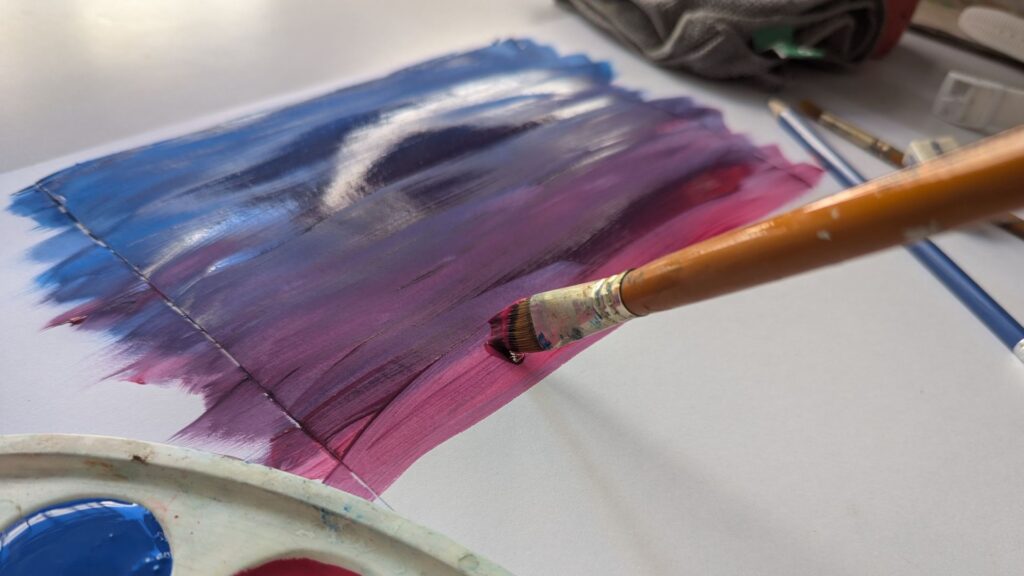
The Problem with Relying on Art Tutorials for Learning
As an experienced art teacher, I have encountered many students who come from “tutorial-heavy” backgrounds. I’ve seen classrooms where teachers:
- Complete the artwork for the student.
- Tell the student exactly which colors to use without explaining why.
- Focus on the “pretty picture” rather than the learning process.
Teaching the “Why” and “How” is much harder than giving a step-by-step demo, but it is the only way to give students artistic independence. Imagine the growth a student experiences when they finally understand how to mix the perfect shade of green, rather than just being told to grab “Sap Green.”
Free 5-Day Art Challenge
Master the fundamentals of art in 5 days. Stop copying, start creating.
A Better Way: The Fundamental Skills Method
When I began my journey as an educator, I realized most resources were just tutorials on “how to draw a cat” or “how to paint a sunset.” This was a “rabbit hole” of constant searching for new ideas.
To fix this, I developed a curriculum that breaks down every part of drawing and painting into core principles. Here is what changed when I moved away from tutorials:
- Student Autonomy: I never drew on my students’ work. They learned to make their own choices.
- Growth over Perfection: Giving up control over the final outcome was scary, but it allowed students to treat art as a learning experience.
- Parental Value: Parents noticed the difference. They realized their children weren’t just bringing home “cookie-cutter” art; they were gaining lifelong skills.
Frequently Asked Questions (FAQ)
Are art tutorials a waste of time? Not if used as a supplement. They are great for learning specific techniques, but they cannot replace a comprehensive art curriculum that teaches foundational skills.
How do I know if an art teacher is effective? An effective teacher explains the “why” behind every step and encourages the student to make their own artistic decisions rather than just copying a demonstration.
What should I learn before following tutorials? Focus on the “Big Four”: Perspective, Color Theory, Value/Shading, and Composition. Once you understand these, you can look at any tutorial and understand why the artist is making certain choices.
Read more about what you need to know if you’re looking to start learning art
So, the next time you are tempted to learn from an art tutorial, make sure you have a solid foundation of the fundamental skills of art or that the instructor is explaining the why of what they are doing.
And if you’re a teacher, consider bringing more of the “how” and “why” when demonstrating to your students how to complete an art project. This approach will help your students understand what they are doing and enable them to approach art as a learning experience that they can use again and again.
Master the Art of Art
- Join the Waitlist: Our signature art courses for kids and teens open only twice a year. Get on the list here.
- If you are a teacher looking to move away from the “tutorial trap,” I can help. Click here to get the details to watch our masterclass on how to create plan art lessons that work, in minutes.
- Are you a beginner artist looking to learn skills? Join our Free Five day art challenge here.
- Want to learn art skills without picking up a paintbrush? Get 30 days of email tips to your inbox!